Odin
About
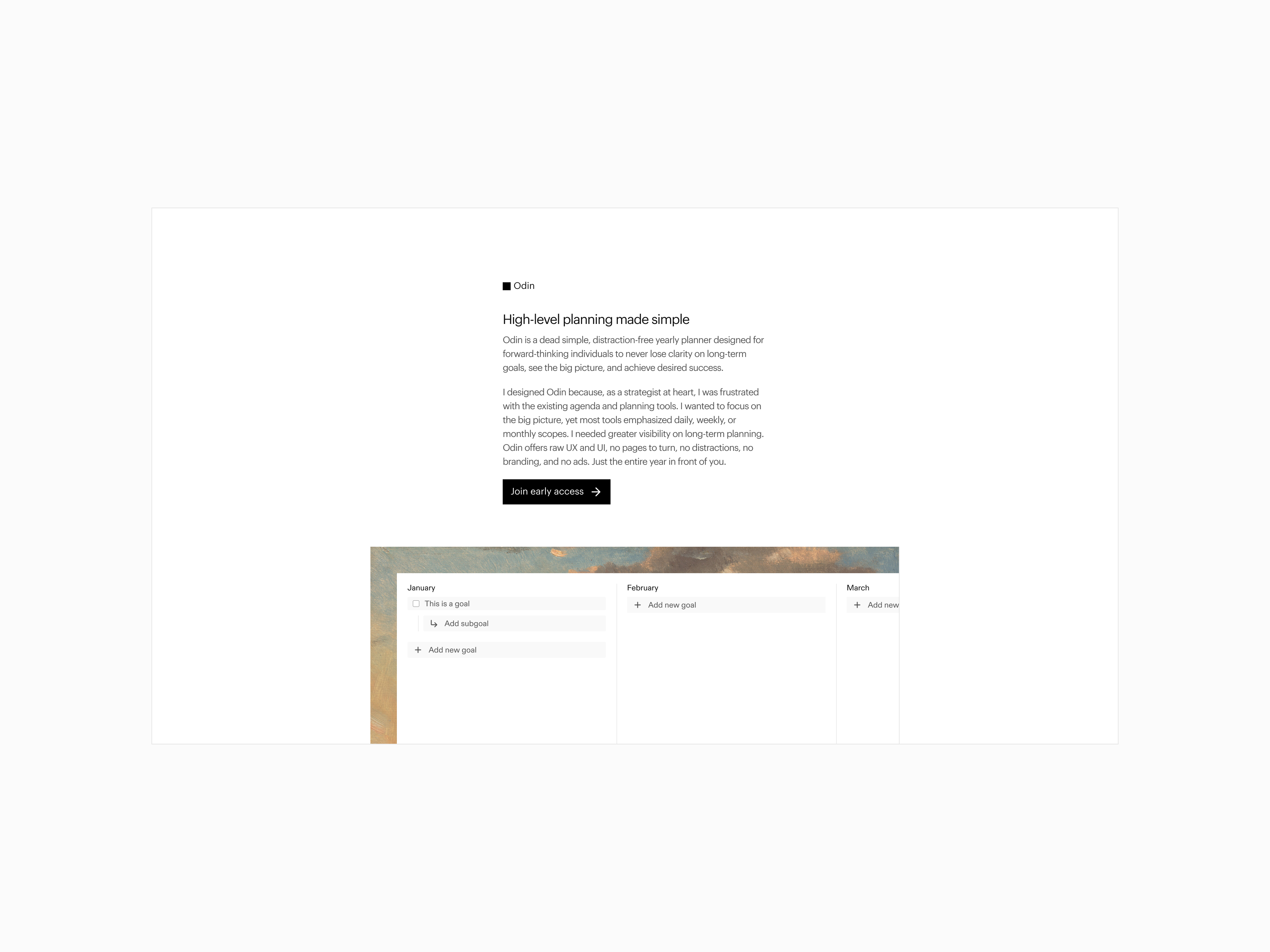
Odin connects long-term goals to daily action.
Outcome
I designed and built the product entirely solo, covering product strategy, research, UI/UX, frontend development, onboarding, and post-launch iteration despite starting with no development experience. I shipped the product to production, grew it to 50+ active users, and generated revenue from paying customers.
Problem
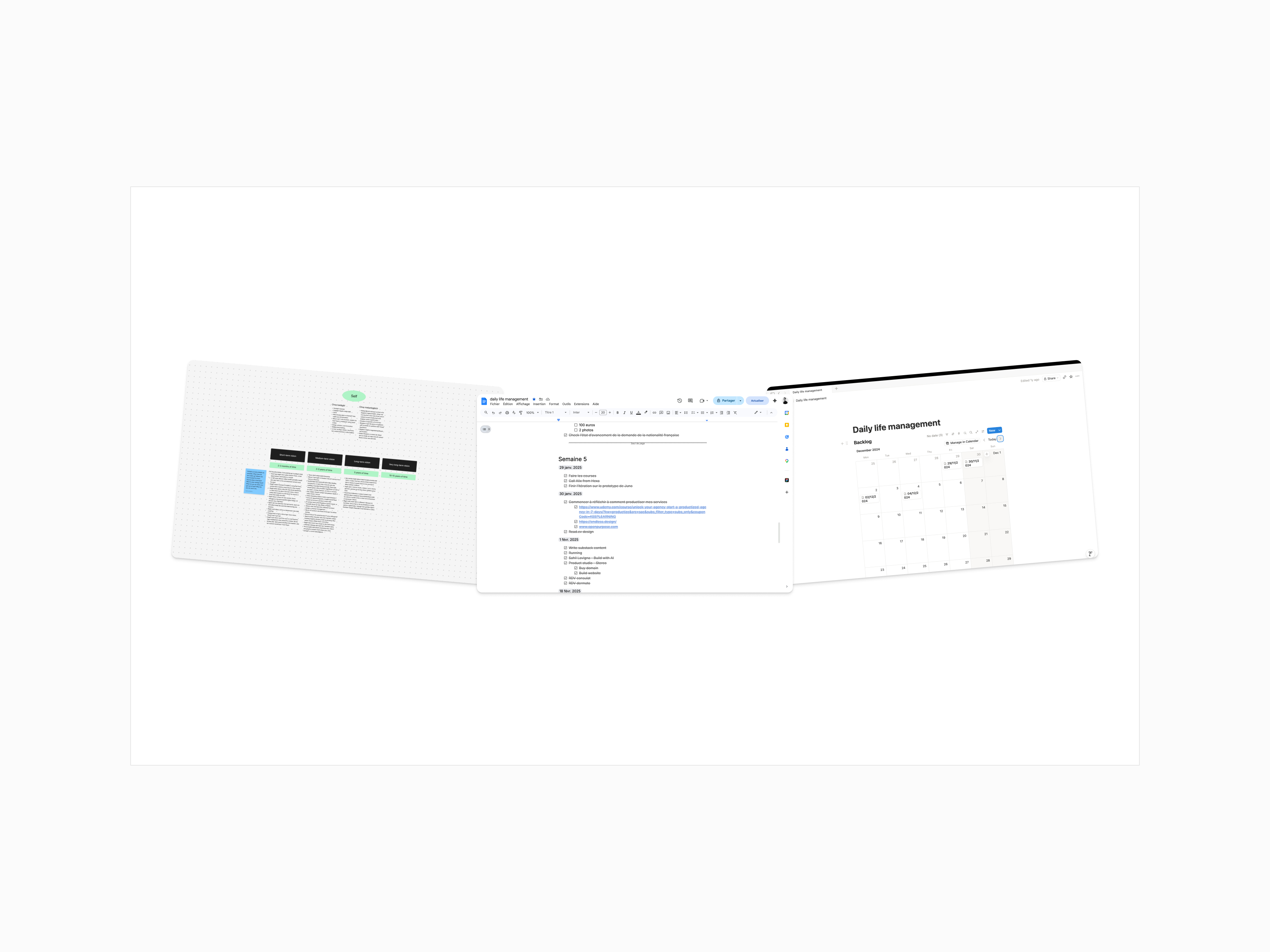
My goals lived across Notion, Figma, Apple Notes, and paper.
The real problem was not organization. It was visibility.
When goals disappeared from view, I defaulted to planning instead of action. I would reorganize systems, rewrite plans, and refine workflows while losing sight of the direction I actually wanted to move toward months or years ahead.
Most productivity tools helped organize information. Very few helped keep long-term goals present enough to influence daily behavior.
Research
Research revealed a pattern I did not expect: people still relied heavily on paper planners.
Not because paper was more powerful, but because digital tools often introduced too much structure too early. New views, new patterns, hidden menus, overloaded interfaces. Users spent more time managing the system than thinking about what actually mattered.
Out of 64 survey responses:
- ~69% mentioned using pen and paper regularly
- ~61% struggled to break large goals into actionable steps
- ~50% wanted to visualize the entire year in one place
That insight changed the direction of the product completely.
I stopped thinking about how to build a better productivity app and started thinking about why paper still felt easier to return to.
Product System
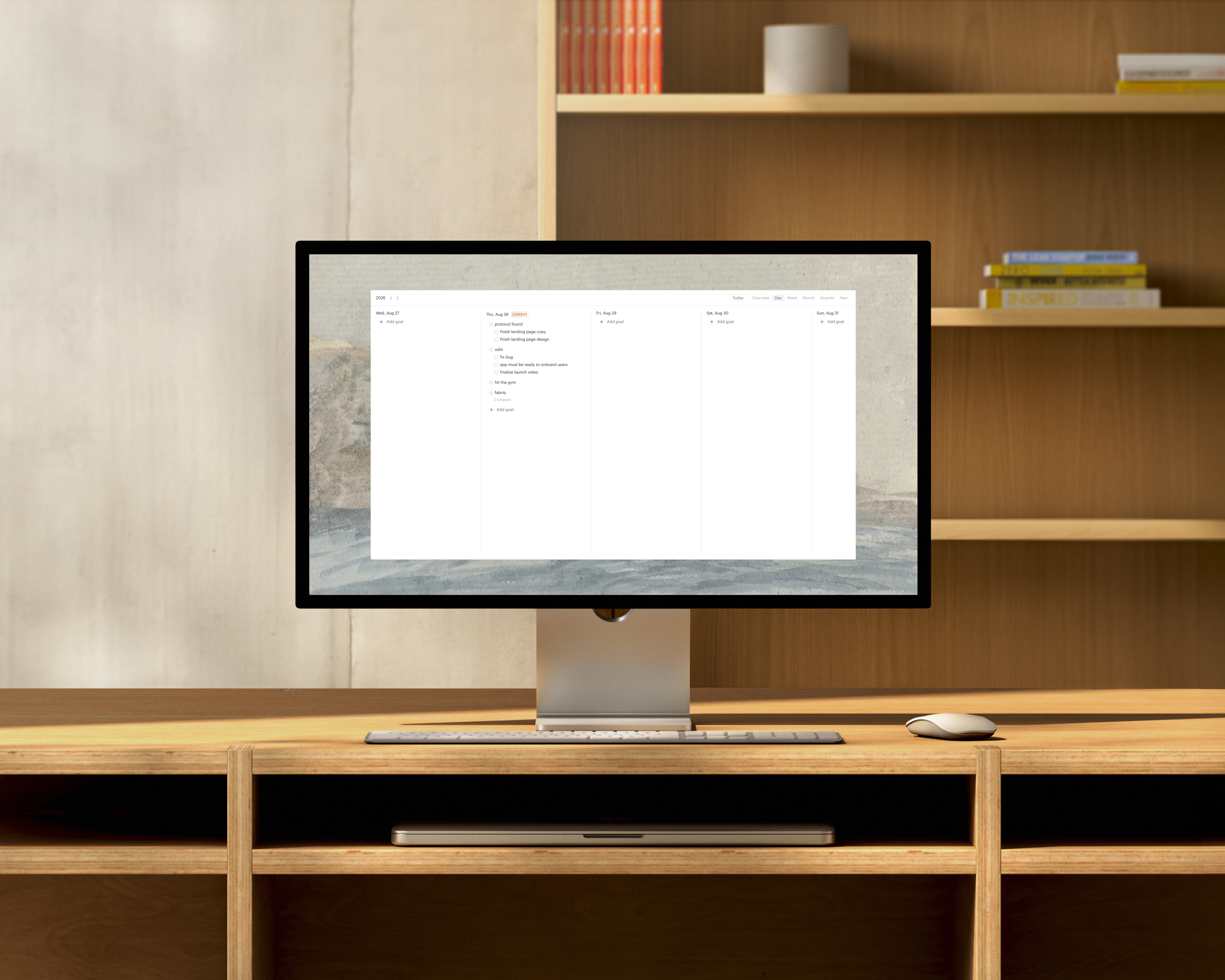
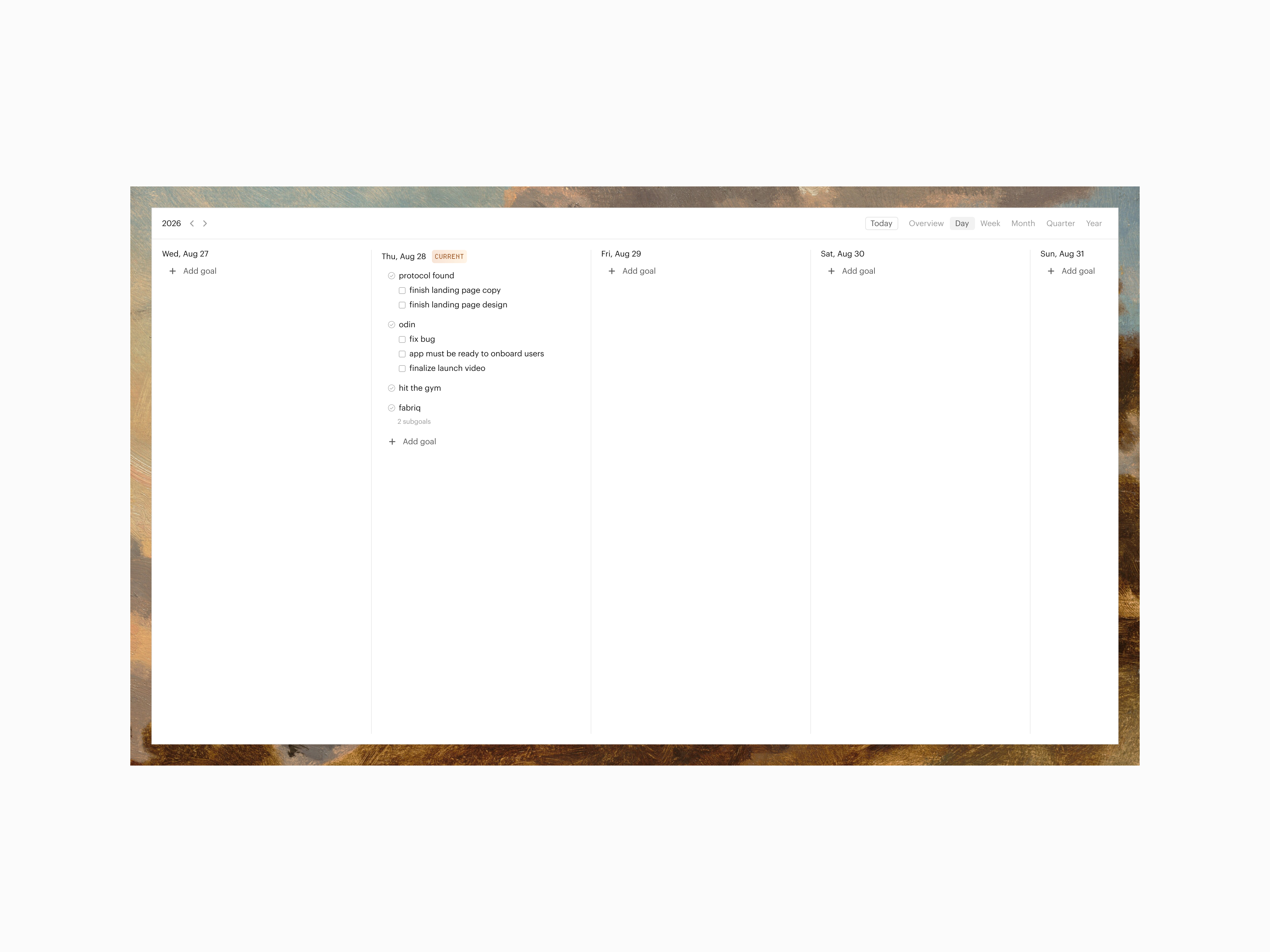
I kept noticing the same pattern emerging: the column.
Paper planners already work this way. A column for the day. A column for the week. A column for the month. The structure stays familiar while the timeframe changes.
That familiarity matters.
People do not need to relearn how the product works every time they zoom out from a day to a month or from a month to a year. The mental effort stays low because the structure stays stable.
I built Odin around the same principle. The same column system powers every timeframe: daily, weekly, monthly, quarterly, and yearly. Users learn the structure once, then carry that understanding across the entire product.
I enforced one constraint throughout the project:
start from one concept, and refuse to introduce another until the first one genuinely fails.
That constraint shaped every decision moving forward.
Instead of adding more navigation systems, views, and interaction patterns, I focused on making the existing system feel lighter and easier to move through:
- fast transitions between timeframes
- interactions that never interrupt focus
- visual continuity across the product
- subtle feedback reinforcing progress and completion
As the product evolved, this consistency became increasingly important. The more the product reused familiar behaviors, the less mental effort users needed to spend navigating it.
I did not optimize for feature density. I optimized for a product people could return to daily without feeling overwhelmed by it.
Role
I handled the full product lifecycle:
- Problem identification
- User research
- Product strategy
- UI/UX design
- Frontend development
- User onboarding
- Post-launch iteration
This project marked my first time building and shipping a production application from scratch, so I learned development while actively designing and shipping the product.
Learnings
Product quality comes from reducing friction repeatedly
I used to believe product quality came from big ideas. This project changed that completely.
Most quality comes from fixing small sources of friction repeatedly: unclear states, inconsistent behavior, unnecessary clicks, visual noise, awkward transitions, timing issues, and moments where the interface interrupts focus instead of supporting it.
The final experience did not come from one breakthrough. It came from hundreds of small corrections layered over time.
Waitlists do not validate willingness to pay
I initially treated waitlist signups as evidence of demand. After launch, I realized curiosity and willingness to pay measure two very different things.
People join waitlists easily. Very few pay.
The fastest way to validate a product is introducing payment much earlier than feels comfortable.
Distribution needs to shape the product early
I treated acquisition as something separate from the product itself. That was a mistake.
If I rebuilt Odin today, I would think much earlier about visibility, sharing behavior, retention loops, and mechanisms that naturally encourage growth.
Strong products still struggle when distribution gets treated as an afterthought.